
Your body is very good at adapting. Ask more of it and it gets stronger; keep asking for the same thing and it stops bothering. If you’ve been lifting the same weights for the same reps for months, you’re no longer building. You’re maintaining.
The American College of Sports Medicine (ACSM) puts it plainly in its position stand on resistance training: to keep adapting, you need training that progresses. That, in one sentence, is progressive overload.
In short
- Progress needs a training stimulus that grows with you.
- Weight is only one lever. Reps, sets and technique count too.
- Rule of thumb: beat your target by two reps in two sessions in a row, then add roughly 2–10% to the load.
- You don’t need to take every set to failure.
- If you don’t log your training, you can’t progress it on purpose.
What progressive overload actually means
Progressive overload means raising the demands on your muscles step by step, in a controlled way. Not in leaps, not on a whim, but so that you can see in black and white that you’re moving forward.
The idea is old. The trouble is that it often gets boiled down to one question: how much is on the bar? In reality, there are several ways to make a stimulus harder.
The levers
- Load: more weight for the same number of reps.
- Reps: more reps with the same weight.
- Volume: more working sets per muscle group per week.
- Execution: greater range of motion, more control, cleaner technique.
- Rest: depends on your goal. For maximal strength, the ACSM recommends three to five minutes between sets; for muscular endurance, much shorter breaks.
One lever per exercise at a time is usually enough. Change weight, sets and tempo all at once and you’ll never know what actually worked.
Heavier, or more reps?
A 2022 study by Plotkin and colleagues put this to the test. Participants with at least a year of training behind them spent eight weeks on lower-body exercises, either adding weight while keeping reps constant or adding reps while keeping the weight the same. Both approaches worked, with muscle growth and strength gains landing close together.
That fits a meta-analysis comparing light and heavy loads (Schoenfeld et al., 2017). In the studies it pooled, where every set was taken to failure, muscle growth was achieved across a wide range of loads. For maximal strength, heavier loads had the edge.
The practical upshot: if building muscle is your main goal, you have plenty of freedom in choosing your rep range. If you want to get as strong as possible, heavy sets of low reps belong in your plan.
More sets, more growth – up to a point
Another meta-analysis (Schoenfeld, Ogborn & Krieger, 2017) found a dose-response relationship: on average, more weekly sets went hand in hand with more muscle growth. That doesn’t mean you should add sets every week. Volume only counts as progress if you can recover from it.
How close to the limit?
Does every set have to end in failure? No. A 2023 meta-analysis by Refalo and colleagues found no evidence that training to momentary muscular failure builds more muscle than stopping just short of it.
That’s why many coaches work with “reps in reserve”: you end the set when one to three clean reps would still be possible. Your technique stays solid and fatigue stays manageable.
The 2-for-2 rule
So when is it time to add weight? The American Heart Association (AHA) offers a simple rule of thumb in its 2023 scientific statement on resistance training: if you can complete two more reps than planned on an exercise in two consecutive sessions, the load can go up by 2–10%. The ACSM recommends a very similar increase.
In practice, it looks like this:
- Train within a target range – say, three sets of 8–10 reps.
- Push the reps up within that range first.
- Once you’ve hit two reps above target – 12 instead of 10 – in two sessions in a row, add a little weight.
- With the new load, start again at the bottom of the range.
If you’re new to strength training, the AHA suggests starting with moderate loads of around 40–60% of your one-rep max and building up gradually from there.
Progress needs recovery
The training stimulus is only half the job. Adaptation happens afterwards – between sessions, overnight, on rest days. That’s why many coaches build lighter weeks in alongside harder blocks. To be honest, the research on these deload weeks is still thin. What matters is that you take fatigue seriously.
Three signs it’s time to ease off:
- Your technique slips even though the weight hasn’t changed.
- Your performance drops over several sessions.
- Joints or tendons start to hurt.
If something hurts, stop loading that area and have persistent pain checked by a doctor.
Putting it into practice
- Log it: exercise, weight, sets, reps – and how many more reps you had left in the tank.
- Set a target range for each exercise that suits your goal.
- Pick one lever: reps first, then load.
- Add volume carefully: extra sets only if your recovery keeps up.
- Review regularly: every few weeks, check that the plan still fits your goal.
At the club
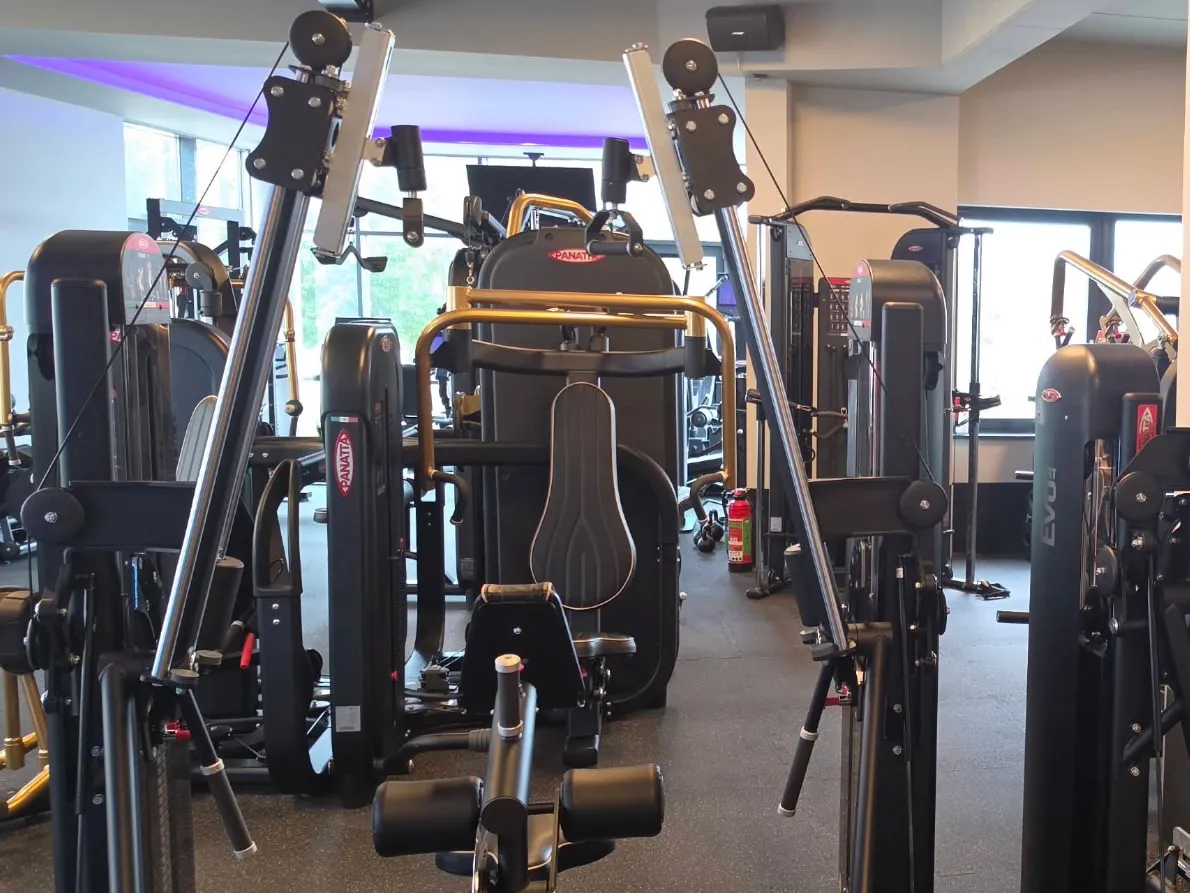
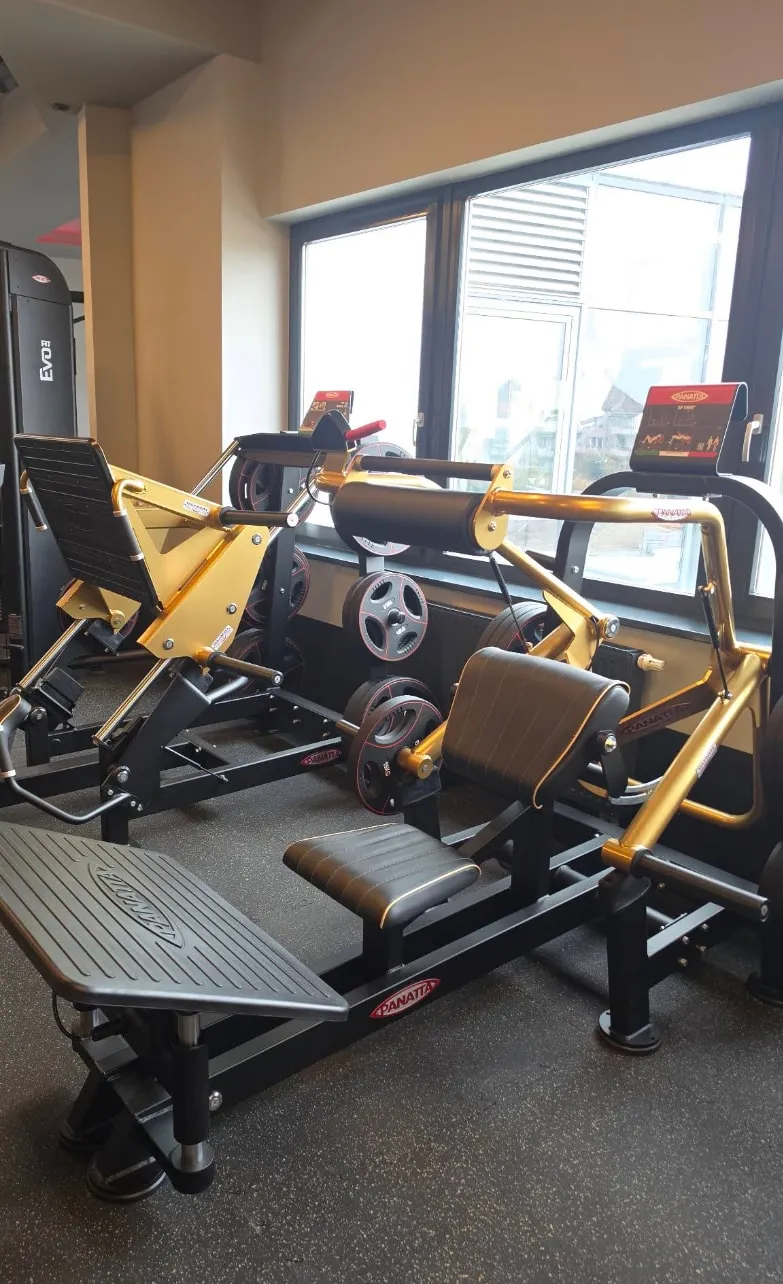
Our selectorized Panatta machines, the plate-loaded machines and the free weights let you dose load precisely. If you’d rather not steer your plan alone, we’ll map out progression and load management with you. Your trial session is a good place to start.
Sources
- American College of Sports Medicine (2009). Progression models in resistance training for healthy adults. Medicine & Science in Sports & Exercise, 41(3), 687–708. doi:10.1249/MSS.0b013e3181915670
- Paluch AE et al. (2024). Resistance exercise training in individuals with and without cardiovascular disease: 2023 update. A scientific statement from the American Heart Association. Circulation, 149(3), e217–e231. doi:10.1161/CIR.0000000000001189
- Plotkin D et al. (2022). Progressive overload without progressing load? The effects of load or repetition progression on muscular adaptations. PeerJ, 10, e14142. doi:10.7717/peerj.14142
- Schoenfeld BJ, Grgic J, Ogborn D, Krieger JW (2017). Strength and hypertrophy adaptations between low- vs. high-load resistance training: a systematic review and meta-analysis. Journal of Strength and Conditioning Research, 31(12), 3508–3523. doi:10.1519/JSC.0000000000002200
- Schoenfeld BJ, Ogborn D, Krieger JW (2017). Dose-response relationship between weekly resistance training volume and increases in muscle mass: a systematic review and meta-analysis. Journal of Sports Sciences, 35(11), 1073–1082. doi:10.1080/02640414.2016.1210197
- Refalo MC et al. (2023). Influence of resistance training proximity-to-failure on skeletal muscle hypertrophy: a systematic review with meta-analysis. Sports Medicine, 53(3), 649–665. doi:10.1007/s40279-022-01784-y
This article is for general information only and does not replace medical advice.