Strength training with a health condition: start safely, progress wisely
A pre-existing condition is rarely a reason to skip strength training – but it's always a reason to plan it carefully. What the guidelines recommend and what matters most.
 Steve Head Coach & Co-Founder
Published on
5 min read
Plenty of people with health conditions never set foot in a gym. The fear of doing something wrong is real – and justified when nobody is keeping an eye on things. Yet the international guidelines are clear: for many people with chronic conditions, exercise, strength training included, is both safe and worthwhile. Provided it’s well planned and agreed with your doctor.
In short
- For many chronic conditions, the benefits of exercise outweigh the risks, provided there are no contraindications.
- Get medical clearance before you start, especially with heart, metabolic or kidney disease.
- Start slowly, keep the dose moderate, progress in small steps.
- Dizziness, unusual breathlessness, chest pain or palpitations: stop immediately and get checked.
- Some activity is better than none.
What the guidelines say
In 2020, the World Health Organization (WHO) published specific recommendations for people living with chronic conditions for the first time. The evidence reviewed covered cancer, high blood pressure, type 2 diabetes and HIV, among others. The conclusion: for adults with these conditions, physical activity is considered safe where there are no contraindications, and the benefits generally outweigh the risks.
The recommendation for strength work is the same as for all adults: muscle-strengthening activities on at least two days a week. If you can’t manage that (yet), be as active as your abilities allow. Some activity is better than none.
The American Heart Association (AHA) reaches a similar conclusion in its 2023 scientific statement: based on current evidence, resistance training is a safe and effective way to improve cardiovascular health – in people with and without cardiovascular disease. A comprehensive review by Pedersen and Saltin (2015) describes exercise as part of the treatment for 26 chronic diseases, from type 2 diabetes to osteoarthritis and depression.
Get checked first, then train
Whether you need medical clearance before starting depends, according to the American College of Sports Medicine (ACSM), on three factors:
- how active you are right now
- whether you have known heart, metabolic or kidney disease, or symptoms that suggest it
- how hard you want to train
If you have a pre-existing condition, seeing your doctor is the first step. The WHO also suggests seeking professional advice on the type and amount of activity, your limitations, your medication and your overall treatment plan.
Questions worth taking along:
- What kinds of exercise are fine for me – and which aren’t?
- Are there numbers I should keep an eye on, such as blood pressure or blood sugar?
- Does my medication affect my heart rate, blood pressure or exercise capacity?
- Which warning signs should I pay particular attention to?
What the research shows
High blood pressure: A network meta-analysis of 270 randomised trials (Edwards et al., 2023) found that several forms of exercise lower resting blood pressure. Dynamic resistance training reduced it by around 4.5/3 mmHg on average, while isometric holds such as the wall squat were the most effective. According to the AHA, people with controlled high blood pressure can safely do low- to moderate-intensity resistance training with proper breathing technique. In practice, that mainly means breathing steadily rather than holding your breath and straining. If you take blood pressure medication, the AHA advises a longer cool-down to avoid a drop in blood pressure. Never change your medication on your own.
Type 2 diabetes: In the absence of absolute contraindications, people with type 2 diabetes can take part in resistance training, says the AHA. They should check their blood sugar before and after training to avoid hypoglycaemia. Caution is needed with diabetic neuropathy, and high-intensity strength training isn’t suitable with certain forms of diabetic eye disease. That’s a matter for your doctor.
Joints, bones, nerves: For people with musculoskeletal limitations, advanced arthritis, severe osteoporosis, neuropathies or a previous stroke, the AHA says low- to moderate-intensity resistance training can be beneficial. Machines are likely to be safer than free weights for these groups, and guidance from an exercise professional may add further benefit.
The key principles
- Start slowly: for people with health conditions, the AHA recommends lighter loads with more reps. That keeps the risk low while still delivering health benefits.
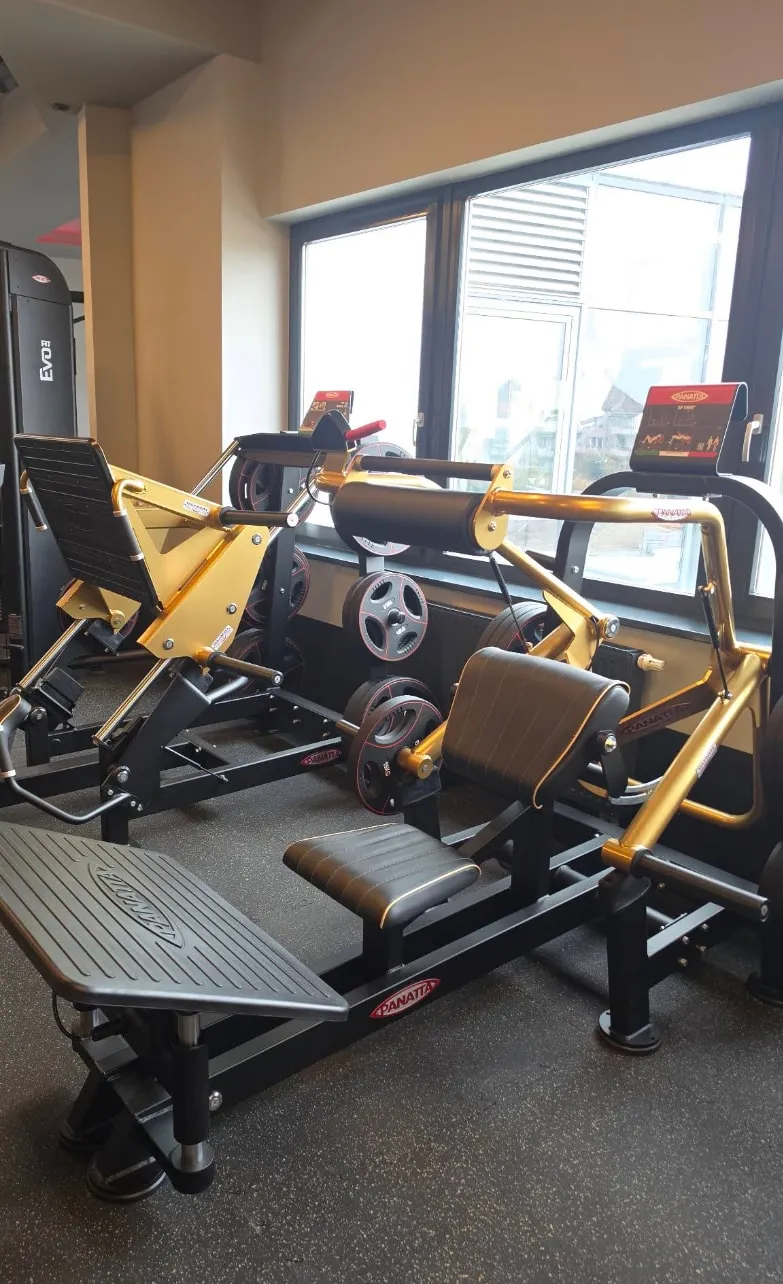
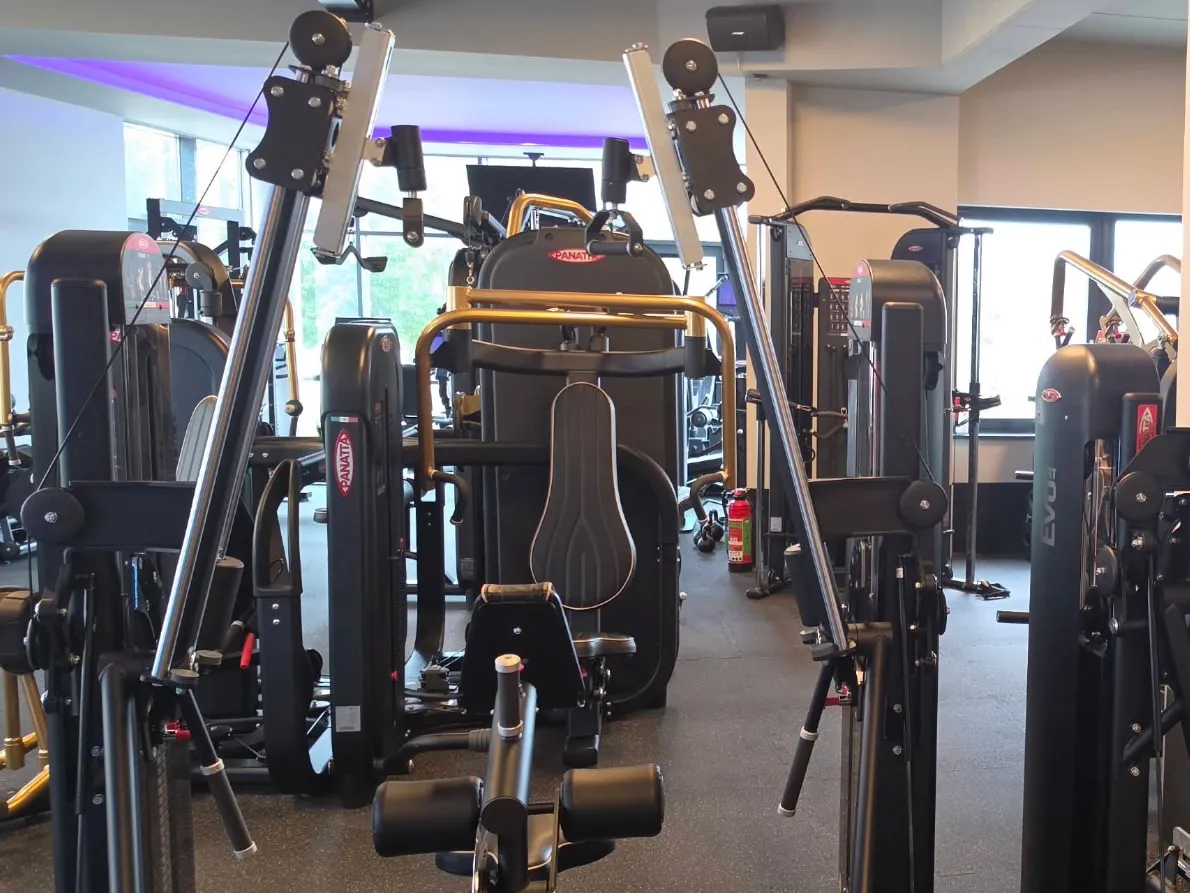
- Use machines: guided movements give you stability, especially at the start.
- Breathe steadily: don’t strain, don’t hold your breath.
- Consistency over intensity: twice a week at a moderate level beats the occasional all-out session.
- Progress in small steps: reps first, then weight.
- Factor in your medication: for example, a longer cool-down if you take blood pressure tablets.
Warning signs: when to stop immediately
The AHA lists warning signs that mean you stop training straight away and only continue after a medical check and clearance:
- dizziness
- excessive breathlessness
- chest pain or pressure
- palpitations
According to the ACSM, exercise-related cardiovascular events are often preceded by warning signs like these. Taking them seriously isn’t overcaution – it’s your most important safeguard. With severe or persistent chest pain or breathlessness, call the emergency number 112 straight away.
Why coaching makes the difference
A standard programme knows nothing about your starting point. An experienced coach spots early when an exercise doesn’t suit you and finds alternatives. At the club, Head Coach Steve brings his medical knowledge as a qualified nurse to the training floor, and physiotherapist Patrick adds expertise on rehab and movement quality.
We’re clear about who does what: diagnoses and clearance come from your doctor. We then build your training around them – step by step, and with an eye on what your body brings to each session.
Your next step
Talk to us about where you’re starting from. At your trial session, we’ll go through what you bring with you, what your doctor has cleared and what a sensible start looks like.
Sources
- Bull FC et al. (2020). World Health Organization 2020 guidelines on physical activity and sedentary behaviour. British Journal of Sports Medicine, 54(24), 1451–1462. doi:10.1136/bjsports-2020-102955
- Paluch AE et al. (2024). Resistance exercise training in individuals with and without cardiovascular disease: 2023 update. A scientific statement from the American Heart Association. Circulation, 149(3), e217–e231. doi:10.1161/CIR.0000000000001189
- Riebe D et al. (2015). Updating ACSM’s recommendations for exercise preparticipation health screening. Medicine & Science in Sports & Exercise, 47(11), 2473–2479. doi:10.1249/MSS.0000000000000664
- Edwards JJ et al. (2023). Exercise training and resting blood pressure: a large-scale pairwise and network meta-analysis of randomised controlled trials. British Journal of Sports Medicine, 57(20), 1317–1326. doi:10.1136/bjsports-2022-106503
- Pedersen BK, Saltin B (2015). Exercise as medicine – evidence for prescribing exercise as therapy in 26 different chronic diseases. Scandinavian Journal of Medicine & Science in Sports, 25(Suppl 3), 1–72. doi:10.1111/sms.12581
This article is for general information only and does not replace medical advice.