

Weekend tennis, five-a-side, a run after work: if you take your sport seriously, targeted athletic training will pay off. It isn’t about training like a pro. It’s about making sure your body can handle what your sport throws at it – the sprints, the jumps, the changes of direction, the long rallies.
In short
- Strength is the foundation: stronger athletes jump, sprint and change direction better.
- Gains in leg strength carry over measurably to sprint speed.
- Strength training substantially lowers the risk of sports injuries; stretching on its own doesn’t.
- Targeted programmes such as Nordic hamstrings and the FIFA 11+ are well researched.
- Two well-planned sessions a week is a realistic place to start.
What athleticism is made of
- Strength: the basis for everything else – stable joints, powerful movement.
- Speed and power: acceleration, jumps, changes of direction.
- Stability and control: a trunk and joints that keep working cleanly when you’re tired.
- Capacity: the ability to absorb training and matches without breaking down.
How you weight them depends on your sport:
- Tennis: short, repeated bursts, quick changes of direction and a lot of rotation through the trunk and shoulder.
- Football: sprints, jumps, challenges – and hamstrings that work hard with every sprint.
- Running: thousands of repeated landings that load the calves, Achilles tendons, knees and hips.
The building blocks stay the same; only the emphasis shifts. And strength almost always sits at the start of the chain.
Strength first
A review by Suchomel, Nimphius and Stone (2016) comes to a clear conclusion: greater muscular strength is closely linked to better jumping, sprinting and change-of-direction performance – and to a lower risk of injury. According to the authors, when it comes to performing better across a wide range of sports, there may be no substitute for being stronger.
A meta-analysis by Seitz and colleagues (2014) shows that strength gains really do carry over: the more squat strength improved, the more sprint performance improved in the studies too. On average, strength training made participants around 3% faster.
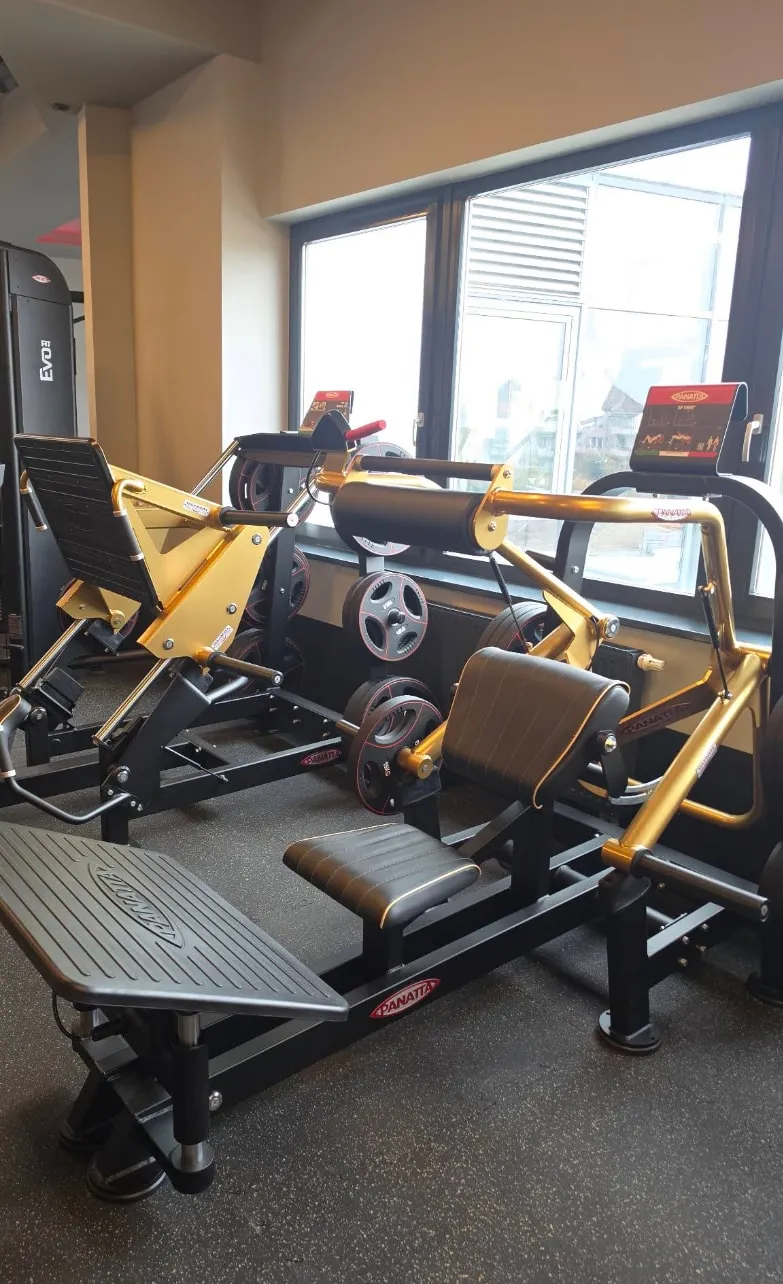
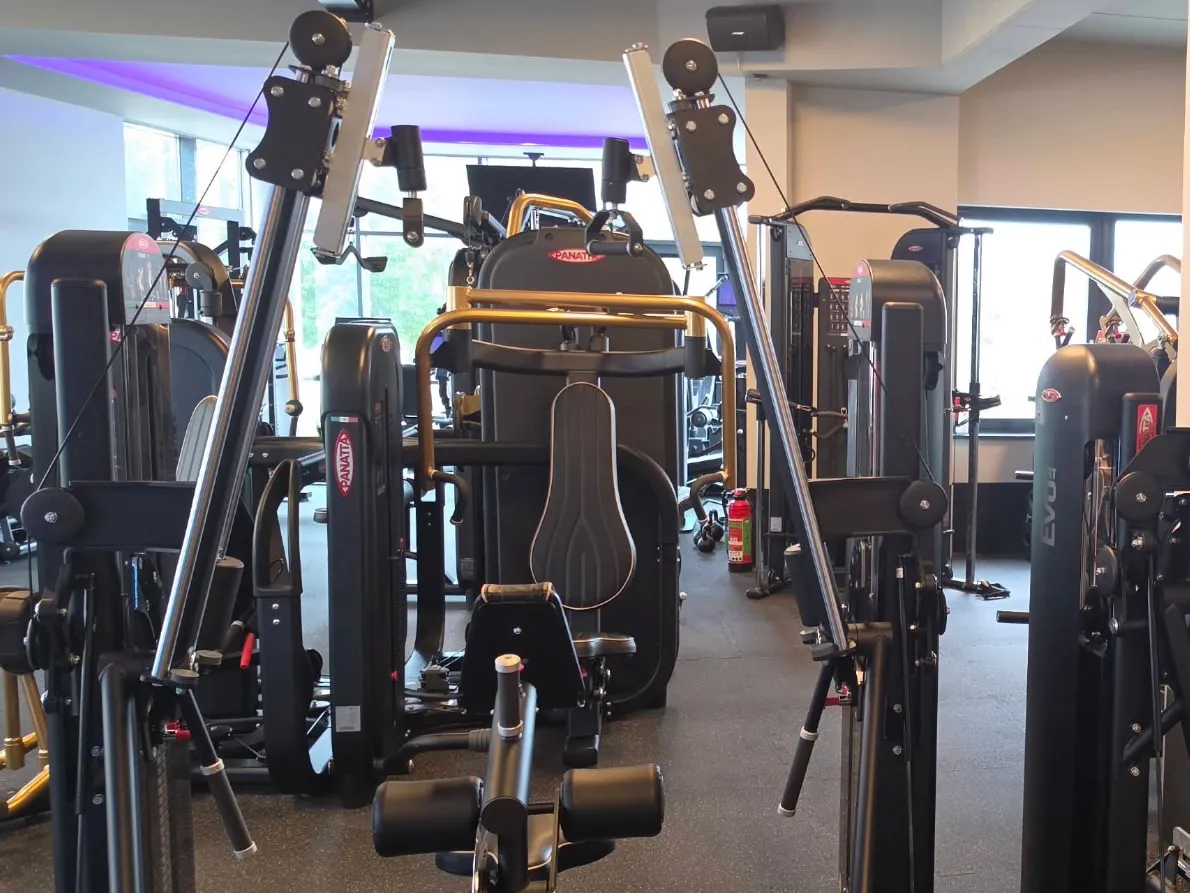
What that means for you: squat variations, hip hinges, pushing, pulling and single-leg exercises form the foundation. On the Panatta machines and with free weights, all of that can be dosed precisely.
Speed has to be trained, not just strengthened
Strength alone won’t give you a quick first step. Jumps, short sprints and changes of direction belong in the plan too – with a small number of high-quality reps and enough rest that every rep stays genuinely fast. This work builds on a solid strength base, not the other way round.
Staying injury-free
For many recreational athletes, this is the most persuasive argument. A meta-analysis by Lauersen and colleagues (2014), covering 25 randomised trials and more than 26,000 participants, found that strength training cut the risk of sports injuries to less than a third. Balance and proprioception training helped too. Stretching on its own, however, offered no measurable protection.
Two programmes stand out for how well they’ve been studied:
- Nordic hamstrings: in a meta-analysis (van Dyk et al., 2019), injury prevention programmes that included this exercise for the back of the thigh halved the rate of hamstring injuries – across a range of sports.
- FIFA 11+: in a meta-analysis (Thorborg et al., 2017), this warm-up programme reduced injuries in recreational and sub-elite football by 39%.
Both are easy to fit into your week. If you’re currently in pain or carrying a fresh injury, though, get it checked by a doctor first.
Less is often more
Athletic training should make you more capable, not more tired.
Alongside work and your actual sport, load management is everything. The WHO recommends that adults do muscle-strengthening activities on at least two days a week – a realistic framework for most recreational athletes. What matters is that the sessions fit around your training and match schedule: more volume in pre-season, shorter and sharper during the season.
What a week could look like
- Session A: jumps or short sprints first, then lower-body and hip strength, finishing with trunk stability.
- Session B: change-of-direction work first, then upper-body strength and single-leg exercises, plus Nordic hamstrings.
How long and how hard these sessions are depends on your sport, your experience and the point in your season. With 24/7 access, you’ll find a slot early in the morning or late in the evening too.
How to get started
It starts with an assessment: what does your sport demand? Where are your strengths, and where are the gaps? Are there old injuries to take into account? From there, we build a plan that adapts to the rhythm of your season.
At the club, this is the domain of athletic performance coach Cedric. He holds a degree in sports science and an athletic coach licence, has worked as a strength and individual coach in tennis and football, and was most recently the athletic coach of a regional-league football team. If you’re coming back from an injury, physiotherapist Patrick is on hand too.
If you want to take your sport to the next level, let’s talk about it at your trial session.
Sources
- Suchomel TJ, Nimphius S, Stone MH (2016). The importance of muscular strength in athletic performance. Sports Medicine, 46(10), 1419–1449. doi:10.1007/s40279-016-0486-0
- Seitz LB et al. (2014). Increases in lower-body strength transfer positively to sprint performance: a systematic review with meta-analysis. Sports Medicine, 44(12), 1693–1702. doi:10.1007/s40279-014-0227-1
- Lauersen JB, Bertelsen DM, Andersen LB (2014). The effectiveness of exercise interventions to prevent sports injuries: a systematic review and meta-analysis of randomised controlled trials. British Journal of Sports Medicine, 48(11), 871–877. doi:10.1136/bjsports-2013-092538
- van Dyk N, Behan FP, Whiteley R (2019). Including the Nordic hamstring exercise in injury prevention programmes halves the rate of hamstring injuries: a systematic review and meta-analysis of 8459 athletes. British Journal of Sports Medicine, 53(21), 1362–1370. doi:10.1136/bjsports-2018-100045
- Thorborg K et al. (2017). Effect of specific exercise-based football injury prevention programmes on the overall injury rate in football: a systematic review and meta-analysis of the FIFA 11 and 11+ programmes. British Journal of Sports Medicine, 51(7), 562–571. doi:10.1136/bjsports-2016-097066
- Bull FC et al. (2020). World Health Organization 2020 guidelines on physical activity and sedentary behaviour. British Journal of Sports Medicine, 54(24), 1451–1462. doi:10.1136/bjsports-2020-102955
This article is for general information only and does not replace medical advice.